

If Everything Is Passing, You’re Testing the Wrong Things.

AgileVerify
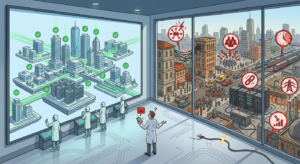 The Illusion of Confidence
A fully passing test suite is often interpreted as a signal of quality. In reality, it can indicate limited test depth. When systems operate in controlled environments with predictable data, stable infrastructure, and ideal user flows, tests tend to pass. Not because the product is resilient, but because the conditions are forgiving. The real risk: You gain confidence without actually reducing uncertainty.
Why “All Green” Should Raise Questions
Consistently passing tests usually mean validation is happening within narrow, expected boundaries.
Typical patterns include:
1. Validation of expected inputs rather than boundary conditions
2. Focus on functional correctness over behavioral resilience
3. Minimal coverage of failure states and recovery paths
4. Limited exposure to variability such as network, device, and concurrency
5. This results in a system that is verified for correctness but not validated for reality.
Where Systems Actually Fail
Production environments introduce variables that test environments rarely simulate.
1. Unpredictable user behavior
2. Degraded or unstable network conditions
3. Interruptions and partial state transitions
4. Data inconsistencies and edge cases
5. Device and platform fragmentation
Failures do not happen in the happy path. They happen in transitions, interruptions, and edge conditions.
The Structural Gap in Most Testing Strategies
Most teams optimize for: “Does the system work as intended?”
But the question that actually matters is: “How does the system behave when conditions are not ideal?”
That is where resilience, not correctness, determines outcomes.
High Impact Gaps to Watch
- Limited Negative and Boundary Testing
Systems are rarely pushed beyond expected limits
Invalid or extreme inputs go untested
Error handling paths are under validated - Weak State and Session Management
Interruptions such as app switching, refresh, or session expiry are not simulated
Recovery mechanisms are not verified - Over Sanitized Test Data
Lack of real world variability
No conflicting, duplicate, or corrupted data scenarios - Performance as a Secondary Concern
Functional success is prioritized over responsiveness
Latency and degradation are not treated as failures - Automation Without Exploration
Deterministic scripts follow fixed paths
Failures are stabilized instead of investigated
Coverage increases but insight does not
What Mature Testing Looks Like
High performing teams move from validation to risk discovery.
- They intentionally test beyond expected conditions
- They simulate real world variability such as network, device, and load
- They validate failure handling and recovery paths
- They treat performance as a core signal, not an afterthought
- They use failures as feedback, not noiseThe goal is not a green test suite, but predictable system behavior under stress.
The Business Implication
A passing test suite does not guarantee successful transactions, stable user sessions, or a consistent user experience. When systems fail in production, conversion drops, support and recovery costs increase, and brand trust erodes, revealing the gap between what is tested and what is truly reliable.
Final Thought
A consistently passing test suite should not be the goal. It should trigger a harder question: Are we validating correctness or uncovering risk?
Because in complex systems, quality is not defined by how often things work, but by how well they hold up when they do not.