

How Poor Software Quality Impacts Customer Lifetime Value (CLV)

AgileVerify
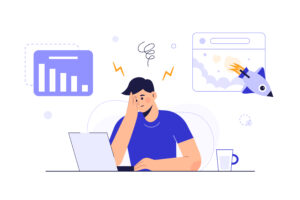
The uncomfortable truth
Most leadership teams still treat software quality as a cost center. A line item. A necessary evil. Something to “optimize.”
But here’s the reality: poor software quality quietly erodes your Customer Lifetime Value (CLV) every single day.
Not in obvious, dramatic ways, but through friction, frustration, and fading trust. And by the time it shows up in revenue metrics, it’s already expensive to fix.
First, let’s align on CLV
Customer Lifetime Value isn’t just a marketing metric. It’s the total revenue a customer generates over their entire relationship with your product.
CLV increases when:
- Customers stay longer
- They spend more
- They refer others
CLV drops when:
- Customers churn early
- Usage declines
- Trust breaks
Now ask yourself:
What directly influences all three?
The product experience and at its core, software quality.
Where poor quality starts hurting CLV
1. First impressions = shortened lifetimes
You don’t get a second chance at onboarding.
If your product:
- Crashes during signup
- Has broken flows
- Feels slow or unreliable
Users don’t “give it time.” They leave.
Impact on CLV: You never even start the lifetime.
2. Friction compounds over time
A single bug is rarely the problem.
It’s the pattern:
- Small glitches
- Inconsistent UI behavior
- Intermittent failures
Individually, they seem minor.
Collectively, they signal: “this product isn’t reliable.”
Impact on CLV: Customers disengage → usage drops → renewals decline.
3. Trust is fragile and expensive to rebuild
Customers don’t just buy features. They buy confidence.
When your system:
- Loses data
- Fails during peak usage
- Produces inconsistent outputs
You’re not just fixing bugs. You’re rebuilding trust.
Impact on CLV: Lower retention + higher support costs + increased churn risk.
4. Support becomes your hidden tax
Poor quality shifts the burden:
- From product → to support teams
- From automation → to manual intervention
More tickets. More escalations. More firefighting.
Impact on CLV: Margins shrink, even if revenue doesn’t, making each customer less valuable.
5. Your best customers leave first
Ironically, your most valuable customers:
- Use your product more
- Push it harder
- Hit edge cases faster
They experience quality issues before everyone else. And they have the least patience for it.
Impact on CLV: High-value churn = disproportionate revenue loss.
6. Negative word-of-mouth scales faster than growth
Customers rarely tweet about stable systems. But they absolutely talk about broken ones.
Poor quality leads to:
- Bad reviews
- Lost referrals
- Damaged brand perception
Impact on CLV: Lower acquisition efficiency + weaker expansion opportunities.
The compounding effect (what most leaders miss)
Poor quality doesn’t just reduce CLV in isolation.
It creates a multiplier effect:
- Higher churn → more pressure on acquisition
- More bugs → slower releases → missed market opportunities
- Lower trust → harder upsells
What looks like a “testing inefficiency” quickly becomes a growth bottleneck.
What high-performing organizations do differently
They don’t just “invest in testing.” They connect quality directly to revenue outcomes.
1. Shift from test coverage → experience coverage
Not “did we test it?” But “did we test what matters to customers?”
2. Build feedback loops into production
Real user behavior > staging assumptions
- Monitor real journeys
- Capture silent failures
- Prioritize based on impact
3. Treat reliability as a feature
Performance, stability, and consistency are not backend concerns, they are core product features!
4. Measure quality in business terms
Move beyond:
- Pass/fail rates
Start tracking:
- Impact on churn
- Revenue at risk
- Customer effort scores
5. Make QA a strategic function
Not a gatekeeper. Not a bottleneck.
But a revenue enabler.
A simple way to think about it
Every bug has a cost. But not every cost shows up in engineering metrics.
Some show up as:
- A lost renewal
- A downgraded plan
- A customer who never refers you
That’s CLV leakage. And it’s often invisible, until it’s too late.
The bottom line for CTOs & CXOs
If you’re only measuring:
- Release velocity
- Cost per test
- Automation coverage
You’re missing the bigger picture.
Software quality is not just about shipping better code.
It’s about protecting and growing customer lifetime value.
A sharper question to ask your teams
Instead of: “Are we testing enough?” Ask: “How much CLV are we losing due to poor quality?” That’s when the conversation shifts from cost control to revenue protection and growth.