

Why IoT Testing Is Harder Than Traditional Software Testing

AgileVerify
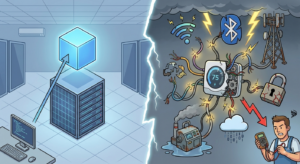
In traditional software testing, the challenges are already well understood. Teams test user interfaces, validate APIs, simulate load, and check edge cases. These systems run in defined environments, and failures, while frustrating, are often predictable and reproducible. But when we step into the world of the Internet of Things IoT, the ground shifts beneath our feet.
IoT testing is harder not because IoT developers are less skilled, but because the systems they build are fundamentally more complex. IoT is not just software. It is software interacting with hardware, networks, cloud infrastructure, and real world environments all at once. Testing in this space calls for a much broader strategy than what traditional application testing requires.
Consider the following reality. In 2020, the cybersecurity vulnerability known as Ripple20 was uncovered in a tiny network library used by millions of connected devices around the world. This single flaw affected products from medical equipment to industrial control systems, and it took extensive coordinated disclosure efforts before it was responsibly mitigated. This incident highlighted how deeply IoT systems intertwine hardware, firmware, network stacks, and embedded code all layers that must be tested thoroughly if users are to remain safe.
Hardware Software and Everything In Between
In traditional software, we test the code and assume a stable environment. In IoT, the environment is unstable by design. Devices operate under varying conditions unstable networks, power fluctuations, interference, physical wear, and deployment in outdoor or industrial settings. These conditions are hard to simulate in a test lab and even harder to automate.
Take this example from the consumer space. In 2021, multiple smart home device ecosystems experienced widespread outages when dependent cloud services went down. Users reported that lights, locks, and climate systems became unresponsive not because the firmware was buggy, but because the system was built on the assumption of constant connectivity. This revealed a critical testing gap. IoT systems must be validated for failure modes, not just ideal conditions. This kind of real world complexity is something traditional web or mobile app testing rarely faces.
Multiple Protocols Many Failures
Traditional software typically relies on well supported network protocols and standardized environments. IoT requires testing across a variety of communication layers WiFi, Bluetooth, cellular, LoRa, Zigbee each with its own timing, interference patterns, and failure characteristics. And because IoT systems often rely on long lived hardware and decades of expected life, testing must include backward compatibility and forward durability.
For instance, an update that changes how a device handles intermittent connectivity might not show problems in a simulated test, but could fail in a crowded office where WiFi interference is common. These kinds of issues often only surface when devices are exposed to real world usage patterns.
Security Is Non Negotiable
Security is a baseline requirement for IoT. A breach in a web app typically leaks data. A breach in an IoT ecosystem can shut down heating systems, disrupt medical devices, or undermine critical infrastructure. Ripple20 was just one example of how pervasive and hidden these vulnerabilities can be, and it took a coordinated disclosure to bring attention to a flaw that existed deep in a shared networking library.
Testing for security in IoT requires not just penetration testing, but also firmware analysis, secure boot validation, update mechanisms, and threat modeling across cloud services and endpoints.
Where AI Helps and Where It Does Not
As IoT systems grow more complex, Artificial Intelligence and Machine Learning are starting to play a role in testing strategies. AI can help analysts detect patterns in telemetry that indicate emerging faults, predict device failures, and help prioritize test cases based on real usage data rather than artificial test scripts alone. This shift toward intelligent IoT systems makes it possible to identify issues earlier and respond more efficiently. For example, machine learning models can highlight when sensor outputs start drifting before they cross failure thresholds, enabling predictive maintenance.
However, AI does not remove the need for structured tests and scenarios. Machine learning models themselves must be validated, and they introduce new challenges such as bias, training data quality, and explainability. In safety critical domains like medical or automotive IoT, regulators will still demand human validation and traceable testing outcomes.
Beyond Scripted Tests Real World Validation
IoT testers increasingly adopt digital twin strategies virtual representations of physical devices to simulate hardware behavior at scale. These twins allow QA teams to replay device activity virtually and inject simulated failures. While powerful, digital twins still cannot fully replicate the physical world, especially in scenarios involving physical interference, temperature extremes, or unplanned user behavior.
This is why strong IoT testing strategies blend automated regression, digital twin simulation, and real hardware testing in diverse environments. It is not enough to run software verification tests in the lab. QA engineers must think about how users will physically interact with devices, what happens when network conditions vary, and how the system responds when cloud dependencies are slow or offline.
The Human Element in IoT Quality
Looking ahead, IoT testing will increasingly require hybrid skill sets understanding embedded systems, networks, cloud services, security, and AI. QA engineers will need to think like system integrators, network analysts, and real world users all at once. Traditional testers focused on UI or API validation will need to expand their mental models to account for physical realities. The future of IoT testing is not just automated test suites, but continuous systems thinking where devices, networks, users, and environment are all part of the software under test.
In short, IoT testing is harder than traditional software testing because the system boundary is larger, the variables are many, the environment is unpredictable, and the stakes are higher. But it is also more impactful. As IoT continues to power homes, industries, and critical infrastructure, its quality directly affects not just user satisfaction, but safety, security, and trust in technology itself.