

Testing LLM Hallucinations: Detection, Measurement, and Mitigation

AgileVerify
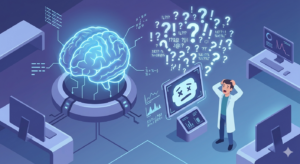 Large language models (LLMs) are rapidly becoming part of modern software systems. They assist developers, power chatbots, summarize documents, and answer complex user queries. Their ability to generate natural language responses has opened new possibilities for automation and intelligent interfaces.
We have all seen it happen you ask an AI a question, it responds instantly, confidently, and in perfect structure… and then you realize something, it is completely wrong. Not broken. Not crashed. Just confidently wrong.
That’s the real problem with hallucinations, they don’t look like failures.
A hallucination occurs when a language model produces information that appears convincing but is factually incorrect or completely fabricated. The response may sound confident and detailed, making it difficult for users to recognize the mistake immediately.
Large language models are now part of real products. They answer customer queries they generate reports, assist internal teams and even sometimes even influence decisions.
And this means hallucinations are no longer just an AI limitation. They are a product risk.
For teams building AI powered products, hallucinations are not just a technical curiosity. They represent a reliability problem that must be tested and managed carefully.
As one AI engineer once remarked during a product review:
“Large language models rarely say they do not know something. They often produce an answer that sounds right.”
That confidence is exactly what makes hallucinations risky in real applications.
The Problem No One Wants to Admit
Traditional testing assumes consistent outputs for the same input, but AI systems behave differently producing varied responses that can be correct, partially correct, or completely fabricated, which makes validation more complex and uncertain.
Your system can pass every test case and still hallucinate in production. It’s not failing. It’s just making things up in a very convincing way.
That is much harder to catch.
When Hallucinations Become Real Problems
The consequences of hallucinations are not theoretical. Several real world incidents have demonstrated how AI generated misinformation can create legal and operational challenges.
A widely reported case involved an airline customer support chatbot. A passenger used the airline’s website chatbot to ask about a bereavement travel policy. The chatbot responded that a refund could be requested after purchasing the ticket.
The passenger relied on that information. However, the airline later rejected the request, stating that the chatbot had provided incorrect guidance. When the dispute reached a Canadian tribunal, the court ruled that the airline was responsible for the information provided by its chatbot and ordered compensation for the passenger.
This case highlighted a key reality for organizations deploying AI systems. If users rely on AI generated responses, the organization remains accountable for the accuracy of that information.
So How to Test Hallucinations?
This is where things become practical. Instead of testing exact answers, you test how the system behaves when it is unsure.
Try this.
- Ask about things that do not exist.
- Give incomplete prompts.
- Remove context.
- Ask for sources.
- Question the output
Does it admit uncertainty, or does it invent details? Does it stay consistent, or change answers with small variations?
Does it explain its reasoning, or just produce confident output? You are not testing correctness alone, you are testing honesty, Consistency and Restraint. That’s the real shift.
Measuring Hallucination Risk
Beyond detection, teams also need ways to measure hallucination frequency.
Some organizations track patterns such as:
- Percentage of responses that contain factual inaccuracies.
- Responses that include unverifiable references.
- Cases where the system fails to acknowledge uncertainty.
Tracking these metrics over time allows teams to evaluate whether improvements in prompts, system architecture, or training data are reducing hallucination risk.
This measurement becomes particularly important when AI systems interact directly with customers or employees.
Techniques to Reduce Hallucinations
While hallucinations cannot be eliminated entirely, several techniques can significantly reduce their impact. There is no magic fix.
But there are practical improvements like:
- Ground responses using real data.
- Design prompts that allow the model to say “I don’t know.”
- Add validation layers where needed.
- And in critical workflows, keep humans in the loop.
The goal is not to eliminate hallucinations completely. It is to control where they matter.
The Expanding Role of QA in AI Systems
Testing language models introduces a new dimension to software quality assurance. Traditional QA focuses on verifying whether software behaves as expected according to defined logic. This is where QA evolves. You are no longer validating features. You are evaluating behavior. Not “Did it return the right answer?” But “Can this system be trusted in real situations?” That is a very different responsibility.
Testers increasingly ask questions such as:
- Does the system invent information when uncertain
- Does it acknowledge gaps in knowledge
- Does it rely on verified sources when generating answers
These behavioral patterns provide a clearer picture of AI system reliability.
Rethinking Quality in AI Driven Systems
Hallucinations highlight a broader shift in how software quality must be evaluated. AI systems will improve. Hallucinations will reduce. But they will not disappear Completely.
So the real question is not: “Can this system answer correctly”
It is “Can this system be trusted when it is wrong”, Because that is where real quality is defined.