

Quality Gates in CI/CD: What Should Really Block a Release in 2026?

AgileVerify
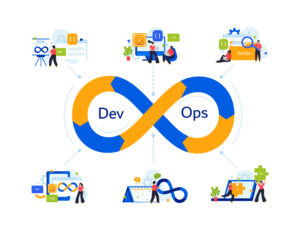
Software teams today release updates faster than ever. Sometimes new code goes live multiple times in a single day. With automated pipelines handling builds, tests, and deployments, pushing changes to production has become much easier. But moving fast also brings a challenge: how do you make sure quality doesn’t get compromised? This is where quality gates come into the picture.
Quality gates are simply checkpoints in a CI/CD pipeline that decide whether a build is good enough to move forward. If something important fails, like a critical test or a security check, the pipeline stops until the issue is fixed.
The idea sounds simple, but in practice, many teams struggle with one big question:
“What should actually block a release?”
Blocking the wrong things slows teams down. Not blocking the right things can break production. Finding the right balance is the key to modern quality engineering.
What Are Quality Gates?
A quality gate is an automated checkpoint in a CI/CD pipeline that determines whether the build can proceed to the next stage.
These checks usually run during stages like:
- Code commit
- Build validation
- Test execution
- Pre-production deployment
- Production release
If the code fails the defined criteria, the pipeline stops. Think of quality gates as automated guardians of software quality.
Why Quality Gates Matter More Than Ever
Software systems today are more complex than ever before.
Modern applications often include:
- Microservices
- Cloud infrastructure
- Third-party APIs
- Mobile and web clients
- AI-powered components
With so many moving parts, manual release approvals are no longer scalable.
Quality gates ensure that:
- Defective code doesn’t reach production
- Security vulnerabilities are caught early
- Performance regressions are detected
- Testing coverage remains strong
They bring confidence to rapid releases.
The Problem With Traditional Quality Gates
In the past, quality gates were often too rigid or poorly designed.
Many teams blocked releases for things that didn’t actually impact users, such as:
- Minor code style issues
- Low-priority static analysis warnings
- Non-critical UI test failures
- Flaky automation tests
This created frustration for developers and slowed down delivery. The result? Teams started bypassing quality gates entirely.
Modern QA teams now understand that not every issue should stop a release.
What Should Actually Block a Release in 2026?
The modern approach focuses on risk-based quality gates. Instead of blocking everything, teams focus on issues that truly affect users, security, or business functionality. Here are the most important gates used today.
1. Build and Compilation Failures
This is the most basic and essential gate. If the code cannot build successfully, it should never move forward in the pipeline.
Compilation errors often indicate:
- Missing dependencies
- Incorrect code changes
- Integration conflicts
Blocking releases here prevents broken builds from spreading further in the pipeline.
2. Critical Test Failures
Automated tests remain one of the strongest quality signals.
However, in modern pipelines only critical tests should block releases, such as:
- Core business workflows
- Payment processing
- Authentication
- Checkout flows
- Data integrity checks
Failing tests in these areas represent real product risks.
3. Security Vulnerabilities
Security is now one of the most important quality gates.
Automated security scans detect issues like:
- SQL injection vulnerabilities
- Cross-site scripting (XSS)
- Dependency vulnerabilities
- Misconfigured authentication
High and critical severity vulnerabilities should immediately block releases. Security can no longer be an afterthought.
4. API Contract Violations
Modern systems rely heavily on APIs. If a service breaks its API contract, it can cause failures across multiple systems.
Contract testing ensures that:
- APIs follow agreed schemas
- Response formats remain consistent
- Backward compatibility is maintained
Breaking an API contract can impact many dependent services, making this an essential quality gate.
5. Performance Regressions
Users expect applications to be fast. Even small performance degradations can impact user experience.
Modern pipelines now include performance checks that monitor:
- API response times
- Page load performance
- System latency
- Resource usage
If a change significantly slows down the system, the pipeline can block the release.
6. Infrastructure Configuration Issues
With infrastructure managed through code, deployment pipelines also validate infrastructure quality.
Quality gates can check for:
- Misconfigured cloud resources
- Missing environment variables
- Incorrect container configurations
- Deployment failures
These checks prevent runtime failures in production.
What Should NOT Always Block a Release?
To maintain development speed, some issues should be flagged but not block deployments.
Examples include:
- Minor code style violations
- Low-risk UI visual changes
- Non-critical automation test failures
- Experimental feature flags
- Low-severity security warnings
These should generate alerts or tickets but should not necessarily stop the pipeline.
The Rise of Smart Quality Gates
In 2026, quality gates are becoming more intelligent. Modern pipelines now incorporate:
1. Risk-based testing
Tests are selected dynamically based on the impacted code.
2. AI-assisted failure analysis
Automation tools identify whether failures are real bugs or flaky tests.
3. Test impact analysis
Only relevant tests are executed when code changes.
4. Dynamic release policies
Quality thresholds adapt depending on the type of release. These innovations make pipelines both faster and safer.
Real-World Example
A fintech company once required all automated tests to pass before release. Their automation suite grew to thousands of tests, many of which were slow or flaky. This caused frequent release delays.
The team redesigned their quality gates using a risk-based strategy:
- Only critical business flow tests blocked releases
- Security scans became mandatory gates
- Non-critical UI tests moved to post-deployment monitoring
- Performance regression checks were added
The result:
- Release time reduced by 40%
- Fewer production incidents
- Higher developer trust in the pipeline
The Future of Quality Gates
Quality gates will continue to evolve as software development becomes more automated.
In the near future, we will likely see:
- AI-driven release approvals
- Predictive quality scoring
- Real-user monitoring integrated into pipelines
- Continuous production validation
Quality gates will shift from static rules to intelligent decision systems.
Final Thoughts
Quality gates are essential for balancing speed and reliability in CI/CD pipelines. But the goal isn’t to block every issue. The goal is to block the right issues.
Modern QA teams focus on gates that protect:
- Security
- Core functionality
- Performance
- System stability
When designed correctly, quality gates allow teams to move fast without sacrificing quality. And in 2026, that balance is what defines successful software delivery.