QA Team Isn’t the Bottleneck, Your Approach Is.
AgileVerify
The Problem Shows Up in QA It Starts Somewhere Else
“QA is slowing us down.” You’ve heard this before, maybe you’ve even said it. But here’s the uncomfortable reality: QA is usually where the problem becomes visible not where it starts.
What Actually Happens in Most Teams
Everything looks fine until the end.
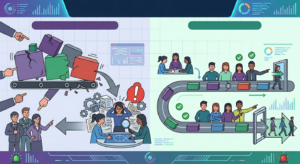
Development runs for days, features pile up, and then everything hits QA at once. QA becomes overloaded, deadlines tighten, decisions get rushed, and QA ends up being labeled as the bottleneck.
The Real Problem Isn’t QA
Let’s be direct.
When QA becomes a bottleneck it is usually because:
- Work is delivered too late for testing.
- Requirements are unclear or constantly changing.
- Code quality is inconsistent.
- Testing is treated as a final phase.
- QA is not slowing things down.
- QA is where everything that was missed earlier finally shows up.
Why This Keeps Happening
Most teams still follow this pattern:
- Build then test then fix
That worked when systems were simpler. It does not hold up anymore. Testing at the end leads to:
- Last minute surprises
- Rework under pressure
- Poor visibility into risk
- Delayed releases
And then the blame shifts to QA.
The Hidden Cost of Blaming QA
Blaming QA feels easy. But it leads to bad decisions:
- Rushing validation
- Skipping critical checks
- Shipping with known risks
And defects do not disappear, they just move to production where the cost is higher and the impact is real.
What High Performing Teams Do Differently
They do not try to make QA faster. They fix how work flows.
And most importantly they involve QA from the start not at the end.
- QA is part of feature discussions
- QA understands what is being built before it is built
- QA helps identify risks early
- QA contributes to defining what success looks like
When a new feature is introduced QA is not informed after development. They are already part of the conversation.
Along with that strong teams focus on:
- Testing early instead of waiting
- Continuous validation during development
- Smaller changes instead of large batches
- Shared ownership of quality across the team
QA is not a checkpoint at the end. It is part of how the product is built.
QA Is a Signal Not a Blocker
Think of QA as a signal.
If work keeps getting stuck there ask:
- Why is everything arriving at once?
- Why are issues being discovered so late?
- Why was this not caught earlier?
Because the bottleneck is rarely the team. It is the system.
The Real Shift That Needs to Happen
Stop thinking: QA needs to be faster
Start asking: How do we reduce the load reaching QA in the first place
That means:
- Better requirements
- Cleaner code
- Earlier validation
- Stronger collaboration
QA should refine quality not rescue it.
What This Means for Leaders
If you are a CTO or CEO this matters more than it seems.
A QA bottleneck is usually a sign of:
- Process inefficiency
- Poor flow
- Late risk discovery
- Fixing it improves:
- Release speed
- Product quality
- Team efficiency
- Customer experience
This is not a testing problem. It is a delivery problem.
Final Thought
QA does not slow teams down. Late testing, Poor flow and Unclear ownership does QA just exposes it. If your pipeline keeps breaking at QA do not try to optimize the last step. Fix what is happening before it.