

Cross Browser Automation Trends in 2026 Where Selenium Still Wins

AgileVerify
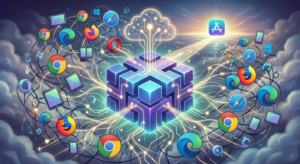
Cross browser automation has never been easy, but by 2026 it has become even more complicated. Modern applications run across countless browsers, devices, and operating systems, each with its own quirks. At the same time, teams are expected to release faster than ever. New tools promise speed, simplicity, and intelligence, leading many to question whether Selenium still has a place in this landscape.
If you have ever heard someone say, “It works on my browser,” you already understand why this conversation matters.
The reality is more nuanced. While newer frameworks have improved developer experience, cross browser testing at scale still demands flexibility, depth, and ecosystem maturity. This is where Selenium continues to stand strong, not because it is trendy, but because it solves problems that newer tools often avoid.
One major trend shaping automation today is browser diversity. Applications are no longer tested only on the latest Chrome version. Teams must validate behavior across Chrome, Firefox, Safari, Edge, and often multiple versions of each. Add mobile browsers and operating system variations, and the matrix grows quickly. Selenium’s native multi browser support remains one of its biggest strengths in this area.
Most teams realize this the hard way, usually when a feature that looked perfect in Chrome suddenly breaks for a customer using Safari.
Another important shift is the rise of cloud based browser execution. Instead of maintaining local infrastructure, teams now rely on cloud grids to run tests across hundreds of browser combinations. Selenium integrates seamlessly with these platforms, making it easier to scale tests without locking teams into proprietary execution engines. This openness gives teams long term control over their automation strategy.
While newer tools often market speed, they usually optimize for a limited set of browsers. This works well for controlled environments, but breaks down when real world variability is introduced. Selenium may require more setup, but it handles edge cases, legacy behavior, and browser specific differences far more reliably. In cross browser testing, predictability matters more than convenience.
Many teams only appreciate this when a last minute release fails on a browser nobody tested thoroughly.
A common assumption is that Selenium is slow or outdated. In practice, execution speed is rarely the real problem. Poor test design, weak synchronization, and unstable environments cause more failures than the tool itself. When written correctly, Selenium tests run efficiently and provide consistent results across environments. In many teams, Selenium becomes faster simply because it forces better engineering discipline.
Another trend in 2026 is the integration of AI assisted testing. AI is being used to improve stability, healing, and prioritization. Selenium fits naturally into this ecosystem. It does not compete with AI tools. It enables them. Many AI driven testing platforms still rely on Selenium under the hood because of its low level browser control and extensibility.
Experienced teams also value Selenium for its language flexibility. Whether teams use Java, Python, JavaScript, or other languages, Selenium adapts to existing tech stacks. This matters in large organizations where automation must align with development practices rather than force change.
Where Selenium truly wins is control and transparency. When a test fails, teams can understand why. There is no black box abstraction hiding browser behavior. This transparency is critical when debugging cross browser issues that only appear under specific conditions.
Anyone who has stared at a flaky failure log at midnight knows how valuable that clarity really is.
That said, Selenium is not perfect. It requires skill, patience, and good design practices. Teams expecting instant automation success without investing in engineering will struggle. But for teams that value stability, coverage, and long term scalability, Selenium remains a dependable foundation.
In 2026, cross browser automation is not about chasing the newest tool. It is about choosing what survives complexity. Selenium continues to win not because it is flashy, but because it respects the messy reality of browsers, platforms, and users.
So the question is not whether Selenium is still relevant?
It is whether teams are willing to build automation that lasts longer than the next trend!