
AI Agents & Data Pipeline Testing: The Expanding Scope of QA

AgileVerify
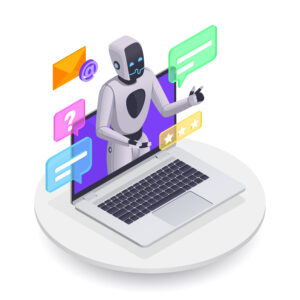 Testing is no longer limited to checking buttons, forms, and APIs. Today, many products rely on AI agents and data pipelines to make decisions, generate content, and drive user experiences. This shift is changing what QA teams need to test and how they think about quality.
QA is no longer just about validating features. It’s about ensuring that data flows correctly and AI behaves reliably.
What Has Changed?
Applications don’t just process input and return fixed outputs anymore.
They:
- Learn from data
- Make predictions
- Automate decisions
- Interact dynamically with users
Behind the scenes, data pipelines feed AI models, and sometimes AI agents take actions automatically.
When something goes wrong, it’s not always obvious. The system may still “work,” but produce incorrect or inconsistent results.
What Are AI Agents?
AI agents are systems that can:
- Take actions based on inputs
- Make decisions
- Interact with users or other systems
Examples include:
- Chatbots handling customer queries
- Recommendation systems suggesting products
- Assistants performing automated tasks
Testing them is different from traditional systems. You’re not just checking functionality, you’re checking behaviour, consistency, and reliability.
What Are Data Pipelines?
Data pipelines are the flow of data across systems.
They:
- Collect data
- Process and transform it
- Feed it into applications or models
If the data is incorrect, outdated, or incomplete, the system can produce wrong results, even if everything looks fine on the surface.
Why QA Needs to Care
Earlier:
- Logic lived in code
- Bugs were easier to identify
Now:
- Behavior depends on data and models
- Issues can come from multiple layers
A failure might be caused by:
- Bad data
- Incorrect transformations
- Model behavior
- Integration problems
QA needs to look beyond UI and APIs.
Key Areas QA Teams Need to Test
1. Data Quality
Check if data is:
- Complete
- Accurate
- Updated
Poor data leads to poor results.
2. Data Flow and Transformations
Validate:
- Data is processed correctly
- No data is lost or corrupted
- Pipelines don’t fail silently
3. Model Output Validation
Since outputs can vary, focus on:
- Relevance
- Consistency
- Acceptable ranges
Instead of exact matches, think in terms of expected behavior.
4. Edge Cases and Unexpected Inputs
Test how the system handles:
- Invalid data
- Missing inputs
- Unusual scenarios
AI systems can behave unpredictably here.
5. System Integration
Ensure:
- Services communicate properly
- Data flows correctly between systems
- Failures are handled gracefully
A Simple Example
Imagine a recommendation feature.
The UI works, APIs respond correctly, but users see:
- Irrelevant suggestions
- Repeated items
- Outdated recommendations
The issue could be:
- A broken data pipeline
- Incorrect data
- An outdated model
Without testing these layers, the problem is hard to identify.
How QA Teams Are Adapting
QA teams are expanding their role by:
- Testing data along with functionality
- Working closely with data and AI teams
- Monitoring systems after release
- Validating real-world behavior
QA is becoming more about understanding the full system, not just testing features.
Challenges to Expect
Testing AI and data systems brings challenges:
- No fixed expected outputs
- Complex dependencies
- Hard-to-debug issues
- Continuous data changes
This requires a shift from checking correctness to evaluating behaviour.
Final Thoughts
The role of QA is evolving. It’s no longer just about testing screens and APIs. It’s about ensuring that data is reliable and systems behave as expected.
AI agents and data pipelines are now core parts of many applications. Ignoring them means missing critical quality risks.
Strong QA teams don’t just test features, they test how systems think, process, and respond.