

Accessibility Testing: Why It Is No Longer Optional for Modern Websites

AgileVerify
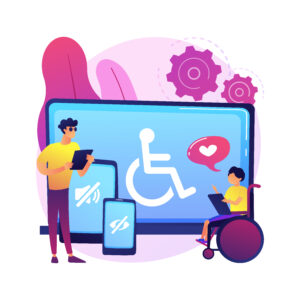
Accessibility testing is often treated as a secondary concern, something to be handled later if time permits or if regulations demand it. In reality, accessibility is a core part of quality. A website that works only for a subset of users is not fully functional, no matter how polished it looks or how fast it loads.
At its simplest, accessibility testing ensures that people of all abilities can use a website effectively. This includes users with visual, auditory, motor, or cognitive impairments. It also includes users navigating with screen readers, keyboards, voice commands, or assistive technologies. Accessibility is not about edge cases. It is about real users interacting with real products every day.
What many teams overlook is how common accessibility needs actually are. Millions of users rely on assistive tools, and many more experience temporary or situational limitations. Someone using a phone in bright sunlight, a user with an injury, or an older adult with declining vision all benefit from accessible design. Even developers themselves often rely on accessibility features without realizing it like using dark mode while coding because bright interfaces cause eye strain over long hours. When a website fails accessibility checks, it quietly excludes users facing these very real conditions, without any obvious signal.
Accessibility Standards and Guidelines That Matter
Accessibility testing is guided by well defined standards, not personal opinion. The most widely accepted framework is the Web Content Accessibility Guidelines (WCAG). These guidelines are built around four core principles: content should be perceivable, operable, understandable, and robust. WCAG defines different levels of compliance, with Level AA being the most commonly targeted for modern websites. Many accessibility laws and policies across countries are based on these guidelines, making them a practical benchmark rather than a theoretical one.
Accessibility testing goes beyond checking color contrast or adding alt text. It involves validating keyboard navigation, focus order, readable labels, meaningful error messages, and consistent structure. A website may look perfect visually and still be unusable to someone using a screen reader. Accessibility testing exposes these gaps early, before they turn into user frustration or lost trust.
Ignoring accessibility also has clear business consequences. Inaccessible websites limit audience reach, damage brand credibility, and increase legal and reputational risk. More importantly, they signal that certain users were not considered during design and development. In an increasingly competitive digital space, exclusion is not just unethical, it is costly.
From a QA perspective, accessibility testing is where empathy meets engineering. It forces testers to step outside their own habits and think about how different users experience the same interface. This mindset improves overall product quality because clearer navigation, better labels, and simpler interactions benefit everyone, not just users with disabilities.
Accessibility should not be treated as a last minute checklist before release. It works best when integrated early into design, development, and testing. Small decisions made early are far easier to implement than fixes added later under pressure.
A website that is not accessible is not truly complete.
And a quality process that ignores accessibility is not truly about quality.